
Want a Supply Chain AI Win This Quarter? Update Your Planning Parameters
What's the fastest AI win in supply chain that can improve service levels while reducing inventory? Updating your planning parameters may be one of the highest ROI AI use cases you can implement this quarter.
This is where AI can quickly add value.
AI can consume demand patterns, supplier performance, and inventory trends to identify where planning assumptions no longer match reality and recommend updates before they impact service or working capital.
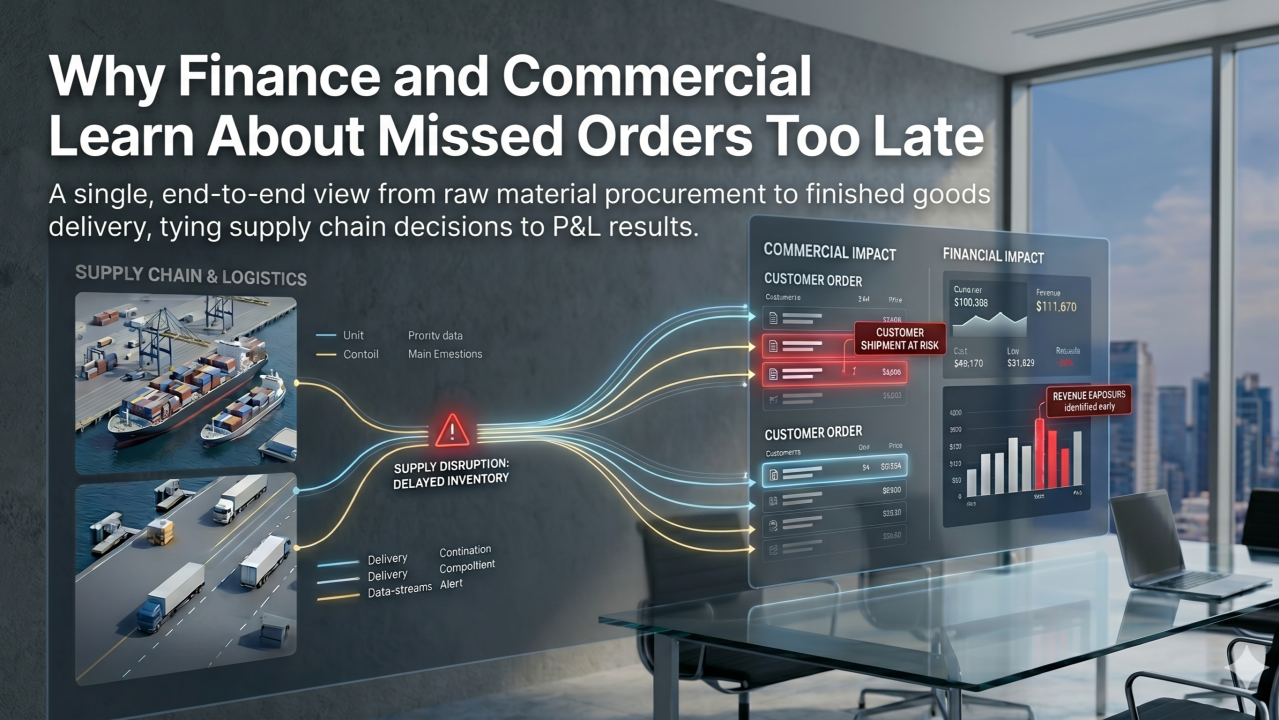
Why Legacy ERP Can't Predict Revenue Risk and How AI Fills the Gap
What if your finance team could see revenue at risk days—or even weeks—before month-end?
For many manufacturers and distributors, revenue misses don't begin in finance. They start with a delayed supplier shipment, a constrained production order, or a material shortage that quietly ripples through the supply chain. Traditional ERP systems are excellent at identifying operational exceptions, but they typically stop short of answering the questions executives care about most: Which customers are affected? How much revenue is at risk? And what action should we take first?
In this article, we explore why legacy MRP-based planning leaves critical business impacts hidden, how forward-chaining AI connects supply disruptions directly to customer and financial outcomes, and how organizations can add this capability on top of existing ERP investments—without a multi-year transformation.
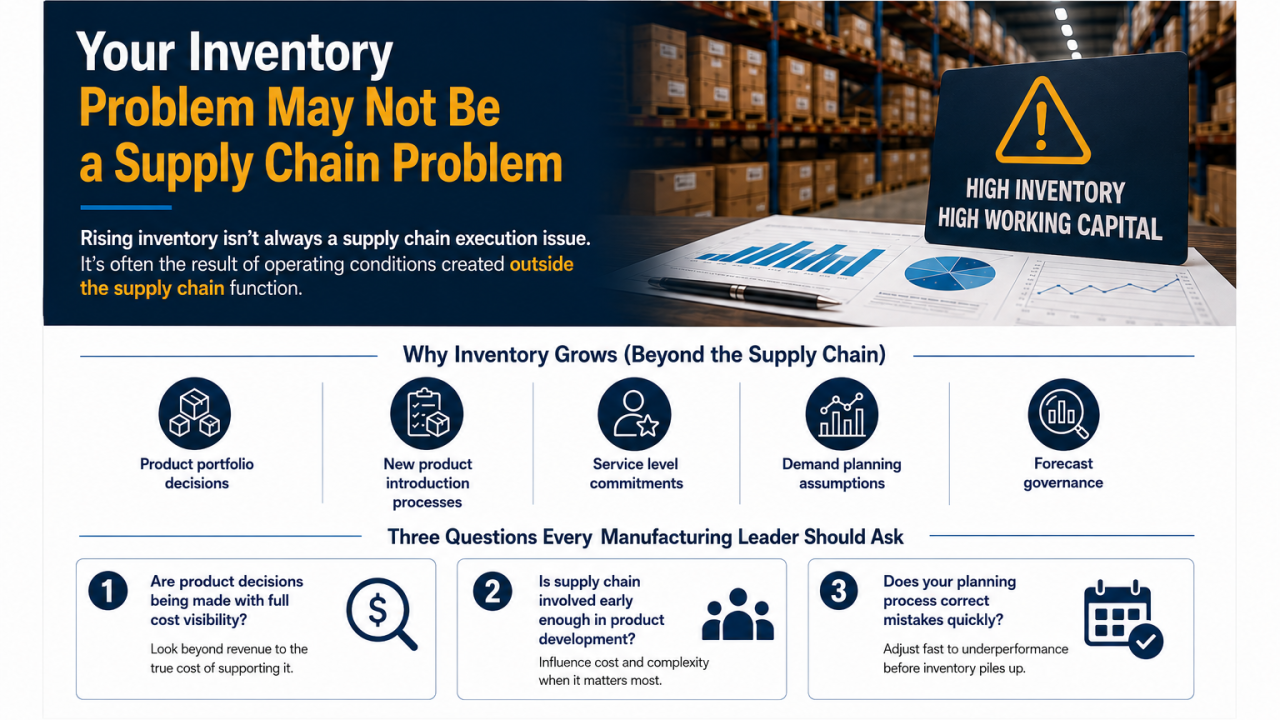
Your Growing Inventory May Not Be a Supply Chain Problem
Your inventory problem may not be a supply chain problem
Recently, I worked with a manufacturer that was experiencing rapidly growing inventory levels across raw materials, WIP, and finished goods.
Leadership initially believed the supply chain organization had lost control.
After a rapid assessment, we found something very different.
The supply chain team was performing exactly as designed. The real drivers of inventory growth were decisions being made elsewhere in the business:
• Product portfolio expansion without full visibility into working capital impact
• Optimistic new product forecasts that became inventory commitments
• Service level expectations that required additional inventory coverage
The lesson was simple: inventory is often a symptom. The root cause is frequently found in product strategy, forecasting discipline, and cross-functional decision-making.
Before asking what your supply chain team is doing wrong, ask a different question:
What operating conditions have we created that make this outcome predictable?